Jacqueline Robertson and Melinda Startling on Hearing Loss, Advocacy and a Mother’s Love
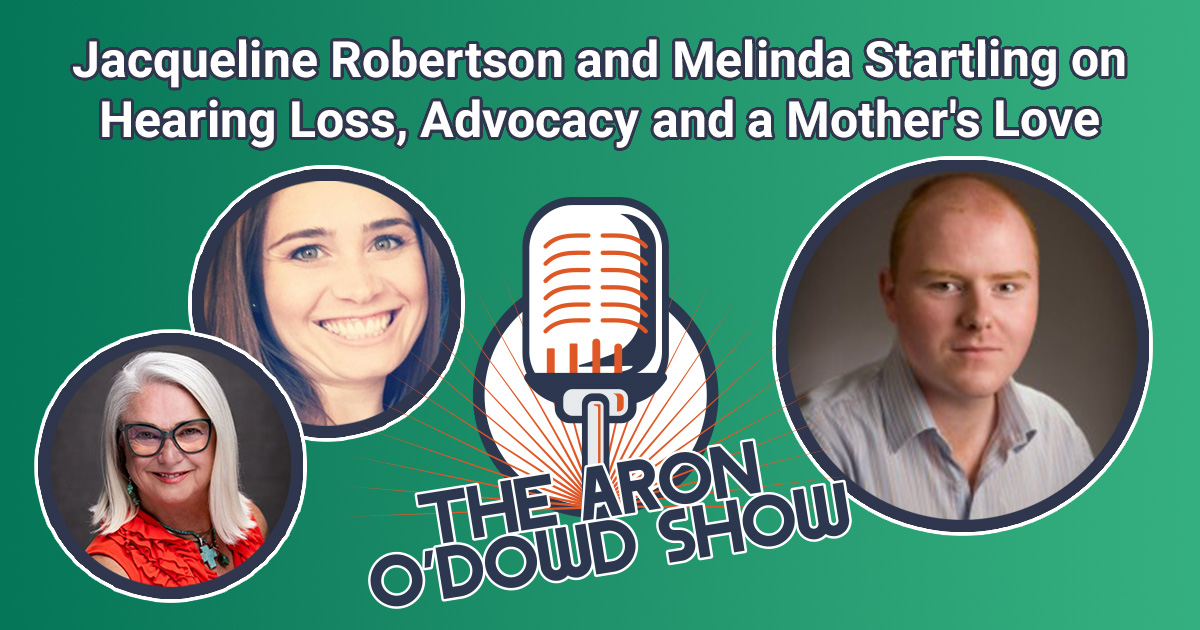
Jacqueline Robertson and Melinda Startling on Hearing Loss, Advocacy and a Mother’s Love
In this episode of The Aron O’Dowd Show, Aron speaks with Jacqueline Robertson and Melinda Startling about hearing loss, communication, family support and the courage it takes to advocate for yourself and the people you love.
The conversation begins with a question that connects directly to Aron’s own lived experience. Aron speaks about visual impairment and asks whether people with hearing loss are sometimes asked if they wish their hearing could be restored. From there, the discussion opens into identity, acceptance, practical support and the reality of navigating the world when communication is not always straightforward.
Living with hearing loss
The episode explores the practical side of hearing loss, including lip reading, specialist support, school, higher education and professional life. These are not small details. They affect how someone learns, works, builds relationships and moves through daily life.
Jacqueline and Melinda speak about the importance of understanding what support is needed and having the confidence to ask for it. Sometimes that means asking people to stop mumbling, to speak more clearly or to face the person they are speaking to so lip reading is possible.
That kind of self-advocacy can feel uncomfortable, but it is also necessary. The episode shows that inclusion is not only about good intentions. It often depends on clear, practical communication.
A mother’s love and changing support
One of the strongest themes in the conversation is family support. The title of the episode points to a mother’s love, but the discussion also shows that support changes over time.
When a child is young, support may mean learning everything possible, finding specialists and helping them access the right tools. As they grow older, support can become more about encouragement, independence and knowing when to step in and when to step back.
The conversation touches on the emotional challenge of that shift. Loving someone does not mean controlling their path. It often means helping them build the confidence to take their own next steps.
Communication is accessibility
A key takeaway from this episode is that communication itself is a form of accessibility. If someone cannot hear clearly, read lips or follow a conversation because people are mumbling, turning away or speaking too quickly, they are being excluded.
Jacqueline and Melinda’s story is a reminder that small changes can make a real difference. Speaking clearly, facing the person, slowing down and checking understanding are simple actions that help people take part fully.
These are not special favours. They are basic acts of respect.
Courage, independence and advocacy
Aron also explores the courage involved in living with disability and difference. The episode makes clear that advocacy is not always dramatic. Sometimes it is as simple as telling someone, clearly and calmly, what you need.
That can be especially important in education, work and public settings. The ability to say, “Please speak clearly,” or “Please face me when you talk,” can change the whole experience of a conversation.
This episode is valuable because it brings together both sides of support, the person living with hearing loss and the people who love and advocate for them.
Why this conversation matters
Jacqueline Robertson and Melinda Startling’s conversation with Aron is a reminder that disability inclusion is deeply human. It is about access, but it is also about patience, love, confidence and communication.
The episode encourages listeners to think about how they speak, how they listen and how they can make everyday conversations more inclusive.
Watch the interview
Watch the full conversation with Jacqueline Robertson and Melinda Startling on YouTube:
Find more conversations from The Aron O’Dowd Show at: